Redstone is Minecraft's system for engineering and electrical wiring, giving you the power to automate everything from hidden doors to massive resource farms. By understanding how power flows from input sources through redstone dust to output mechanisms, you can easily build convenient contraptions and bring your survival base to life.
In Java Edition, sticky pistons lose their attached block when triggered by a 1-tick pulse. In Bedrock Edition, sticky pistons always hold onto their blocks regardless of pulse speed.
Redstone dust cannot travel through full transparent blocks like glass or leaves. Stick to full, solid blocks like stone, smooth stone, or dirt to prevent breaking your circuits.
Gather Redstone and Basic Crafting Materials
Begin by mining Redstone Ore found deep underground below Y-level 15 using an Iron Pickaxe or better. Collect standard materials like stone, cobblestone, and wooden planks to craft your starter components, including Redstone Torches, Levers, and Stone Buttons at a crafting table.
Learn the Essential Power Sources
Every redstone contraption requires an input to provide an active signal. Different power sources behave in distinct ways:
- Levers: Provide a toggled signal that stays permanently active until manually switched off.
- Buttons: Provide a temporary pulse (wooden buttons last 1.5 seconds, while stone buttons last 1.0 second).
- Redstone Torches: Provide a constant power signal of strength 15 and invert signals when placed on the side of a powered block.
- Pressure Plates: Emit a signal when stepped on by players, mobs, or dropped items.
Lay Redstone Dust to Transmit Power
Place redstone dust on top of solid, opaque blocks to create a transmission line. Redstone wire carries a power level from 15 (bright red) down to 0 (dark red), losing one level of power for every block it travels. This means a standard line can only carry a signal across a maximum of 15 blocks before the current runs out completely.
Use Repeaters to Extend and Delay Signals
When your redstone wire reaches the end of its 15-block limit, place a Redstone Repeater facing along the path to refresh the signal back to full strength 15. Repeaters only allow signals to travel in one direction, preventing unwanted backflow. You can also right-click a repeater to cycle through four delay settings (from 1 to 4 redstone ticks), which is crucial for timing complex mechanisms.
Connect Power to Mechanism Blocks
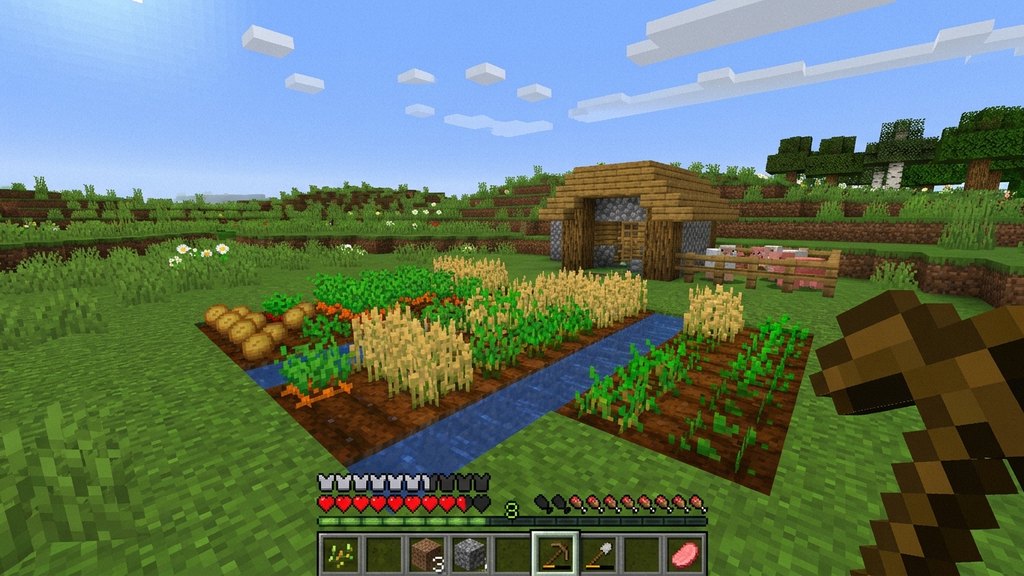
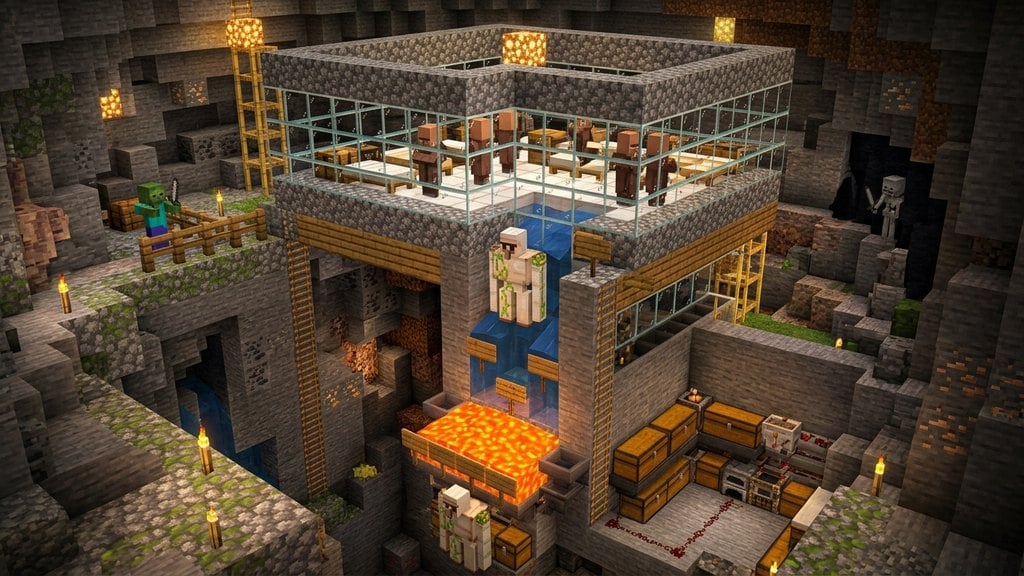
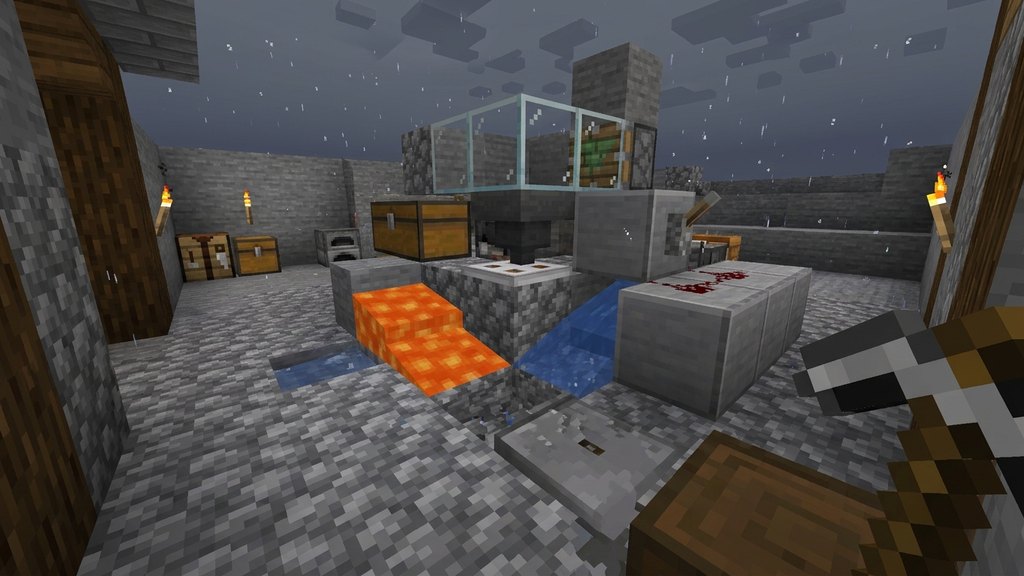
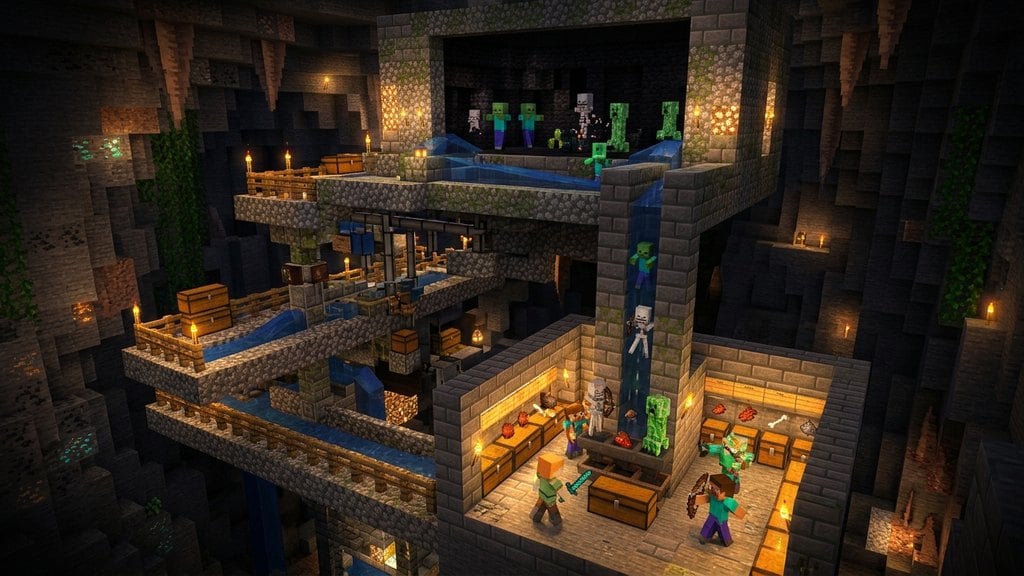
Run your powered redstone lines directly into mechanism blocks such as Redstone Lamps, Pistons, Sticky Pistons, Dispensers, or Droppers. Mechanism blocks activate whenever they receive direct power or are adjacent to a strongly powered block. These interactive outputs form the core of automatic machines, such as an automated wheat farm or a specialized iron farm.
Assemble a Simple Piston Mechanism
Test your knowledge by building a basic automated door or gate. Place two Sticky Pistons facing sideways, attach solid blocks to the piston faces, and run a line of redstone dust behind both pistons. Connect that line to a lever or a pressure plate to push and pull the blocks seamlessly on command.
Frequently Asked Questions
How far can redstone dust carry a signal without repeaters?
A redstone signal travels exactly 15 blocks along redstone dust before dropping to power level 0. Placing a Redstone Repeater boosts the signal back up to strength 15.
What is the difference between soft powering and hard powering?
A block is hard-powered when powered directly by a source or a repeater pointing straight into it, allowing it to activate adjacent dust and mechanisms. A block is soft-powered when powered only by redstone dust running across it, which activates adjacent mechanisms but cannot power adjacent dust lines.
Can redstone signals travel vertically?
Yes. You can run redstone dust diagonally up transparent blocks like glass or top slabs. Alternatively, stack solid blocks and redstone torches vertically to create a torch tower that transmits signals straight upward.