While vanilla Minecraft does not feature an official tameable mob called a Happy Ghast, players can safely capture, pacify, and display these floating Nether giants as docile pets in both Java Edition and Bedrock Edition. By taking advantage of mob sightlines, Name Tags, and glass enclosures, you can turn one of the Nether's most dangerous creatures into a harmless companion for your base.
/summon ghast ~ ~ ~ {NoAI:1b} into the chat console.Understand Ghast Taming Mechanics
In standard survival Minecraft, Ghasts cannot be tamed with food or bred like traditional animals (such as wolves; see How to Breed Dogs). Ghasts are permanently hostile Nether mobs that attack players on sight with explosive fireballs.
However, you can create a pseudo-tamed, peaceful "Happy Ghast" by neutralizing its ability to detect you. Ghasts cannot acquire a target through solid transparent blocks like Glass, meaning an enclosed Ghast will never shoot fireballs and will float serenely in place.
Gather Your Capture Supplies
Before hunting for a Ghast, prepare the essential containment supplies: one Name Tag, an Anvil, several stacks of Glass or Tinted Glass, a Minecart, powered rails, and a Bow or fishing rod. You will also need cobblestone or obsidian to construct a blast-proof staging area.
Bring defensive supplies to stay alive during the capture process. Brew and drink a Potion of Fire Resistance (learn the steps in How to Brew Potions) and equip a Shield to deflect incoming fireballs back at the Nether terrain.
Build an Oversized Nether Portal and Glass Habitat
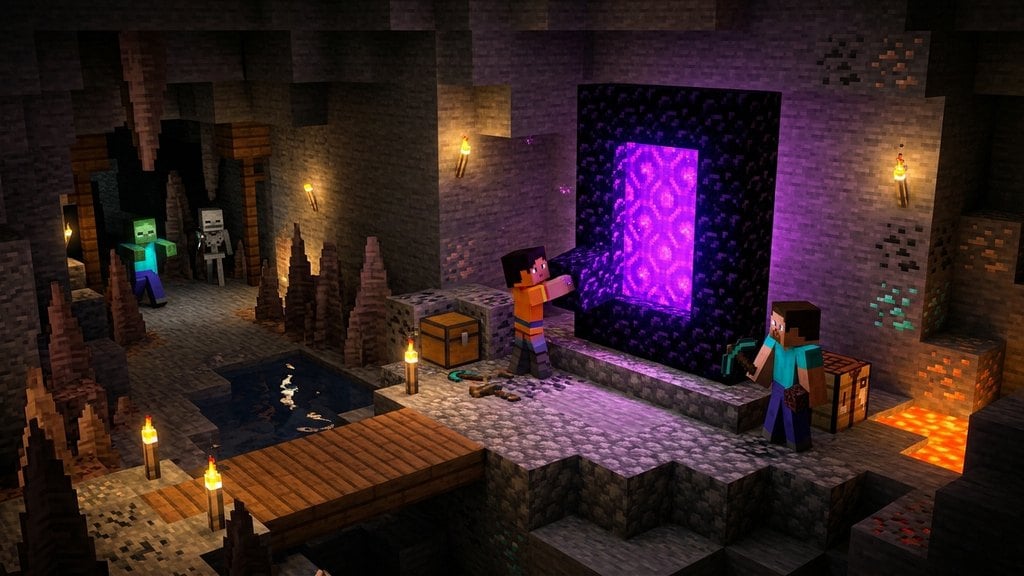
Ghasts have a massive 4x4x4 block collision box, which means standard 2x3 portals are too tight for reliable transport. Construct an oversized portal measuring at least 5x5 blocks in the Nether and connect it to your Overworld base (follow How to Build a Nether Portal for portal linkage tips).
In the Overworld, surround the exit portal with a large containment dome made entirely of Glass. Ensure the internal area is at least 6 blocks wide and 6 blocks tall so your captured Ghast has room to hover without suffocating inside solid blocks.
Trap and Transport the Ghast
Head into the Nether and locate a Ghast in a wide-open biome such as the Nether Wastes or Soul Sand Valley. Lay down rail tracks leading directly through your oversized portal. You can carefully coax the Ghast into a Minecart by placing rails under its hovering shadow, or reel it toward your tracks using a Fishing Rod.
Once trapped inside a Minecart, a Ghast cannot float away. Push the Minecart through the Nether portal. Follow it immediately into the Overworld before it despawns or shoots at vulnerable blocks.
Name the Ghast and Seal the Enclosure
Immediately apply a customized Name Tag (renamed in an Anvil) to the Ghast. Naming the mob ensures it will never despawn, even if you travel far away or restart your game world.
Break the Minecart to let the Ghast hover freely, then immediately seal all openings with Glass blocks. Because Glass completely blocks mob line-of-sight, the Ghast will never enter its attack state. It will remain peaceful, quiet, and smiling inside its display dome as your ultimate exotic pet.
Frequently Asked Questions
Can you tame a Ghast with food in vanilla Minecraft?
No. Neither Java Edition nor Bedrock Edition allows players to feed, breed, or tame Ghasts using items. Pacifying them requires line-of-sight manipulation using glass blocks.
Why does the Ghast stop attacking inside glass?
The Ghast AI requires a completely unobstructed line of sight to detect a player. Solid transparent blocks like Glass and Tinted Glass block their targeting raycasts, preventing them from firing fireballs.
Will a captured Ghast despawn over time?
Yes, hostile mobs despawn when a player moves more than 128 blocks away unless you give them a Name Tag. Always apply a Name Tag to keep your pet permanently loaded.