Amethyst is a vibrant, chiming crystal found inside hollow underground structures known as amethyst geodes. Whether you need amethyst shards to craft spyglasses, tinted glass, and calibrated sculk sensors, or simply want decorative purple blocks for building, finding your first geode is straightforward once you know where to look in both Java Edition and Bedrock Edition.
Budding Amethyst blocks cannot be collected under any circumstances—even with Silk Touch—and break instantly if pushed by a piston. Leave them undisturbed in the geode to produce endless crystals.
Use a pickaxe enchanted with Silk Touch if you want to pick up intact Amethyst Clusters for decorative lighting, as they emit a gentle light level of 5.
Prepare the Right Tools
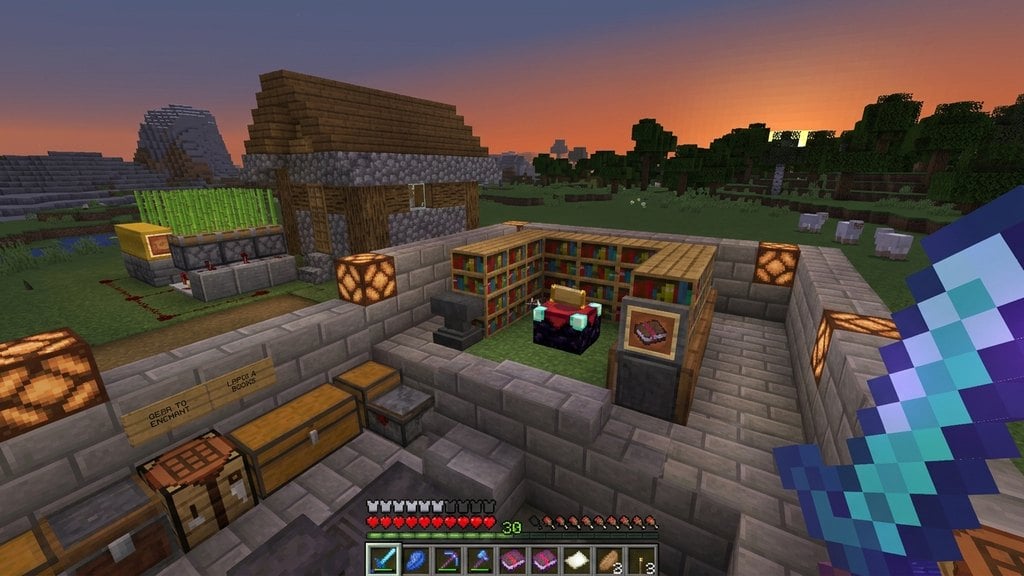
Before setting out, craft an iron pickaxe or better, along with plenty of torches. While you can break amethyst blocks with a stone pickaxe, using a pickaxe enchanted with Fortune significantly boosts the number of amethyst shards dropped from clusters. Consider enchanting your items with Fortune III or Silk Touch before embarking on your expedition.
Search Deep Underground Caves
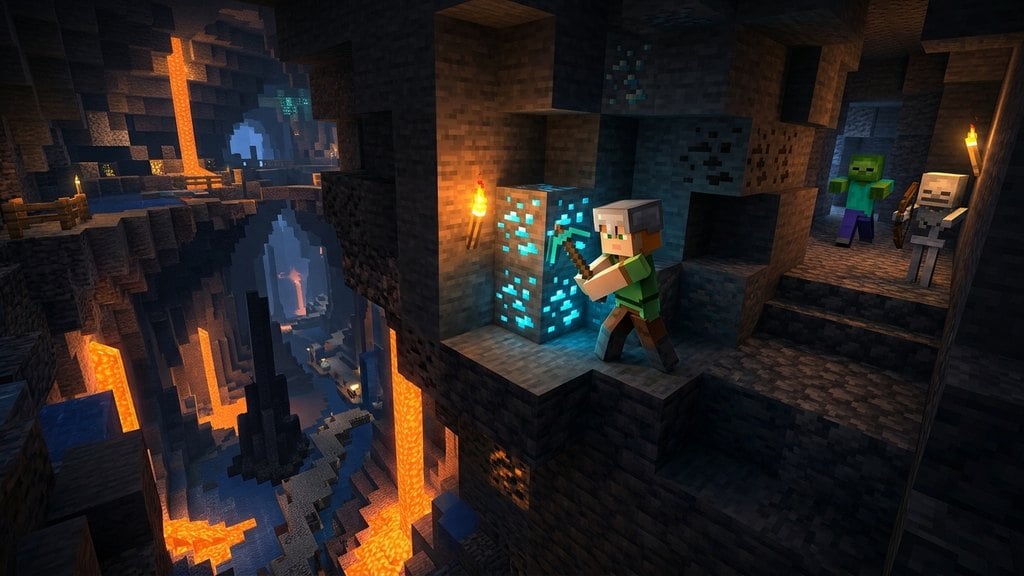
Amethyst geodes generate between Y-levels -64 and 30 in all Overworld biomes. The fastest search method is exploring massive open cave systems, particularly in the deepslate layer below Y=0. Geodes frequently cut directly into cave tunnels, revealing their distinctive spherical shells.
Keep your game audio on and listen for high-pitched, resonant musical notes. Walking on amethyst blocks or water dripping onto them creates a signature chiming sound that alerts you when a geode is hiding right behind a cave wall.
Scan Deep Ocean Trenches
Geodes also spawn partially exposed at the bottom of deep oceans and underwater ravines. Take a boat across ocean biomes and look down into the water. If the water is murky, brewing potions of Night Vision will make underwater features clear from the surface.
Look for rounded domes projecting out from the seabed gravel or sand. These ocean geodes allow you to bypass cave spelunking entirely and mine directly into the cavity from above.
Identify the Geode Shell Layers
Every amethyst geode consists of three distinct concentric layers. The outermost shell is dark gray Smooth Basalt, followed by a middle ring of white Calcite, and an inner wall lined with regular Block of Amethyst and Budding Amethyst.
If you uncover a patch of smooth basalt or calcite while strip mining or caving, dig through it immediately, as it is a guaranteed sign that a hollow amethyst pocket lies directly behind.
Harvest Fully Grown Clusters
Enter the hollow center of the geode and locate Amethyst Clusters, which are the fully grown, sharp crystal formations protruding from budding blocks. Break mature clusters with a pickaxe to harvest four amethyst shards. Immature buds (small, medium, and large) drop nothing when broken without Silk Touch.
Be careful never to break the Budding Amethyst blocks marked with an X-like pattern on their faces. New amethyst buds will continue to grow on these blocks indefinitely over time.
Frequently Asked Questions
What Y-level is best for finding amethyst geodes?
Geodes generate between Y=30 and Y=-64 across all Overworld biomes. The highest concentration is exposed in deepslate caves between Y=-10 and Y=-50, where massive caverns frequently cut open their outer shells.
Can you move Budding Amethyst to your base?
No. Budding Amethyst breaks and drops nothing when mined with any tool, even with Silk Touch. It also shatters if moved with pistons. If you want a renewable amethyst farm, you must build it around the geode's original coordinates.
How long does it take for amethyst crystals to grow?
Amethyst buds grow through four stages based on random block ticks whenever a player is nearby. Each growth stage has a roughly 20% chance to progress during a tick, typically taking an average of a few Minecraft in-game days to fully mature into a harvestable cluster.